COP17: 81.9% of Mongolia’s territory affected by desertification and land degradation
 Ч.Сумъяабазар
08 сарын 18, 2026

ULAANBAATAR, Mongolia—81.9% of Mongolia’s territory is affected by desertification and land degradation, according to an updated national Desertification Atlas presented and discussed during the 17th session of the Conference of the Parties to the UN Convention to Combat Desertification (UNCCD COP17).
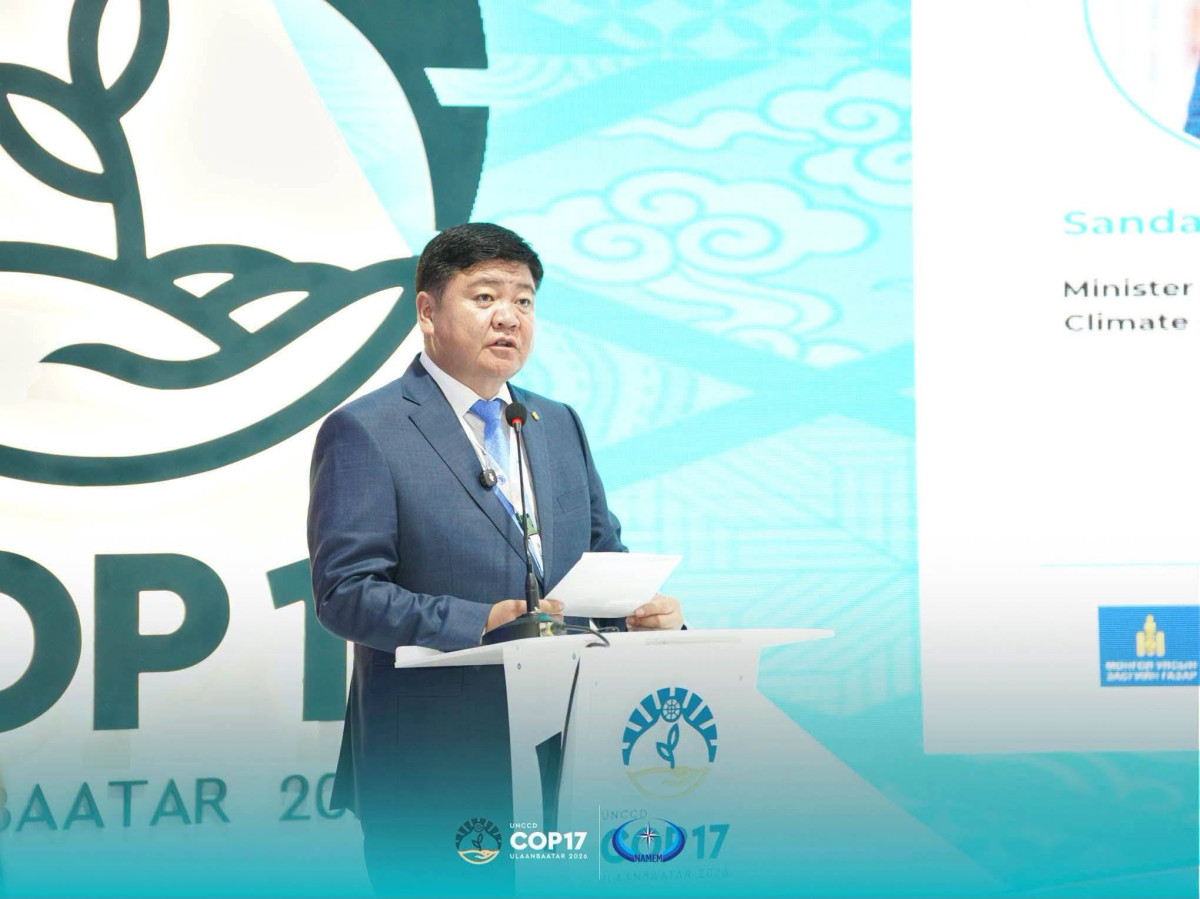
The updated atlas was jointly developed by researchers from the Institute of Meteorology, Hydrology and Environment under the National Agency for Meteorology and Environmental Monitoring, and institutes of the Mongolian Academy of Sciences.
The study assesses environmental and climate changes across Mongolia and their associated risks, providing data intended to support policymaking and planning across social and economic sectors.
Although titled the “Mongolia Desertification Atlas,” the publication covers a much broader range of environmental and socio-economic factors.
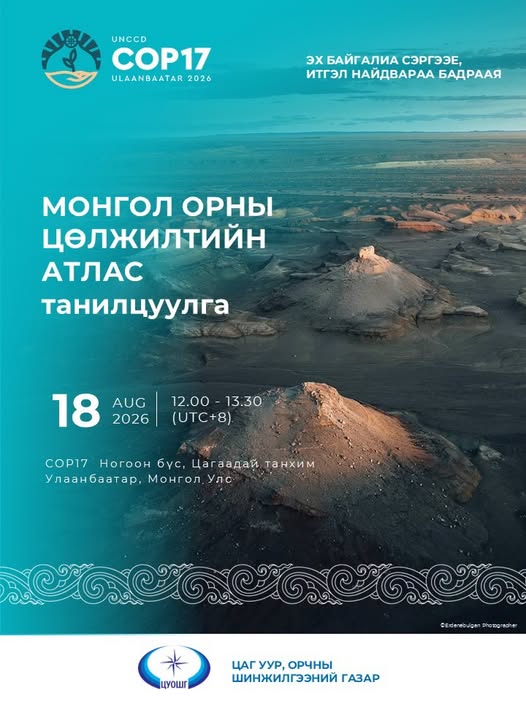
It combines data on climate conditions, drought, aridity, soil water and wind erosion, soil degradation, water resources, biodiversity loss, pastureland and forest and steppe fires with socio-economic factors including population, livestock numbers, settlements and roads.
According to the atlas, 81.9% of Mongolia’s territory is affected by desertification and land degradation. Of the total territory:
- 0.6% is classified as very severely degraded;
- 9.4% as severely degraded;
- 43.2% as moderately degraded;
- 28.7% as slightly degraded; and
- 18.1% shows no detected degradation or significant change.
The atlas also identifies several major environmental trends.
Soil moisture has declined across 93.3% of Mongolia’s territory, while river flow has decreased in around 60% of the country’s rivers. A trend towards increasing drought intensity was observed across 53.5% of the territory.
The updated atlas is based on meteorological, hydrological and environmental monitoring data from 1991 to 2025, combined with satellite imagery and remote-sensing data.
It contains 10 chapters and 71 maps, providing a comprehensive picture of the drivers and geographic patterns of desertification and land degradation in Mongolia.
Researchers say the atlas is intended to serve as a scientific basis for decisions on land use, water resources, pasture management, agriculture, infrastructure, disaster risk reduction, environmental management and climate-change adaptation.
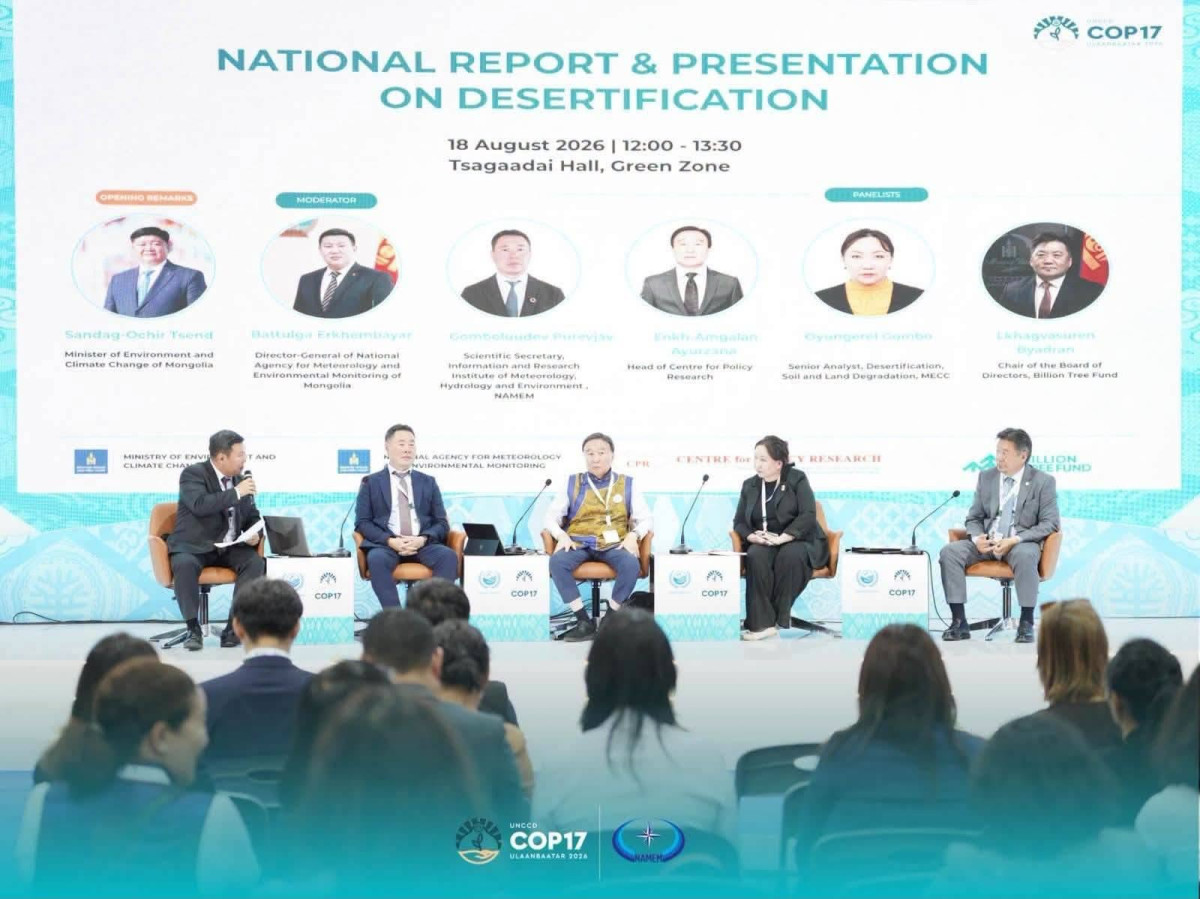
The findings come as Mongolia hosts UNCCD COP17, where countries are discussing global action to combat desertification, land degradation and drought.
The atlas is expected to support efforts to better understand the scale of land degradation in Mongolia and inform measures to restore degraded land and manage natural resources sustainably.
Холбоотой сэдвүүд
Санал болгох