COP17: Side session on “Data-Driven Land Degradation Management” Held
 Ч.Сумъяабазар
08 сарын 21, 2026

ULAANBAATAR, Mongolia—During the 17th session of the Conference of the Parties to the United Nations Convention to Combat Desertification (UNCCD COP17), the National Statistics Office (NSO) and the National Audit Office (NAO) jointly organized a side session under the theme “Data-Driven Land Degradation Management.”
According to the 2025 national assessment, 81.9 percent of Mongolia’s total territory of 1.56 million square kilometers is affected by desertification and land degradation. Furthermore, under Sustainable Development Goal (SDG) indicator 15.3.1, as reported through Mongolia’s national reporting to the United Nations Convention to Combat Desertification, the proportion of degraded land increased from 13.5 percent, or 209.7 thousand square kilometers, in 2015 to 23.4 percent, or 362.6 thousand square kilometers, in 2020.
Although these assessments differ in terms of methodology and scope, they demonstrate the growing need to measure changes in the condition of Mongolia’s land resources with greater precision and to ensure that policies and decisions are grounded in high-quality, reliable quantitative data, participants emphasized during the session.
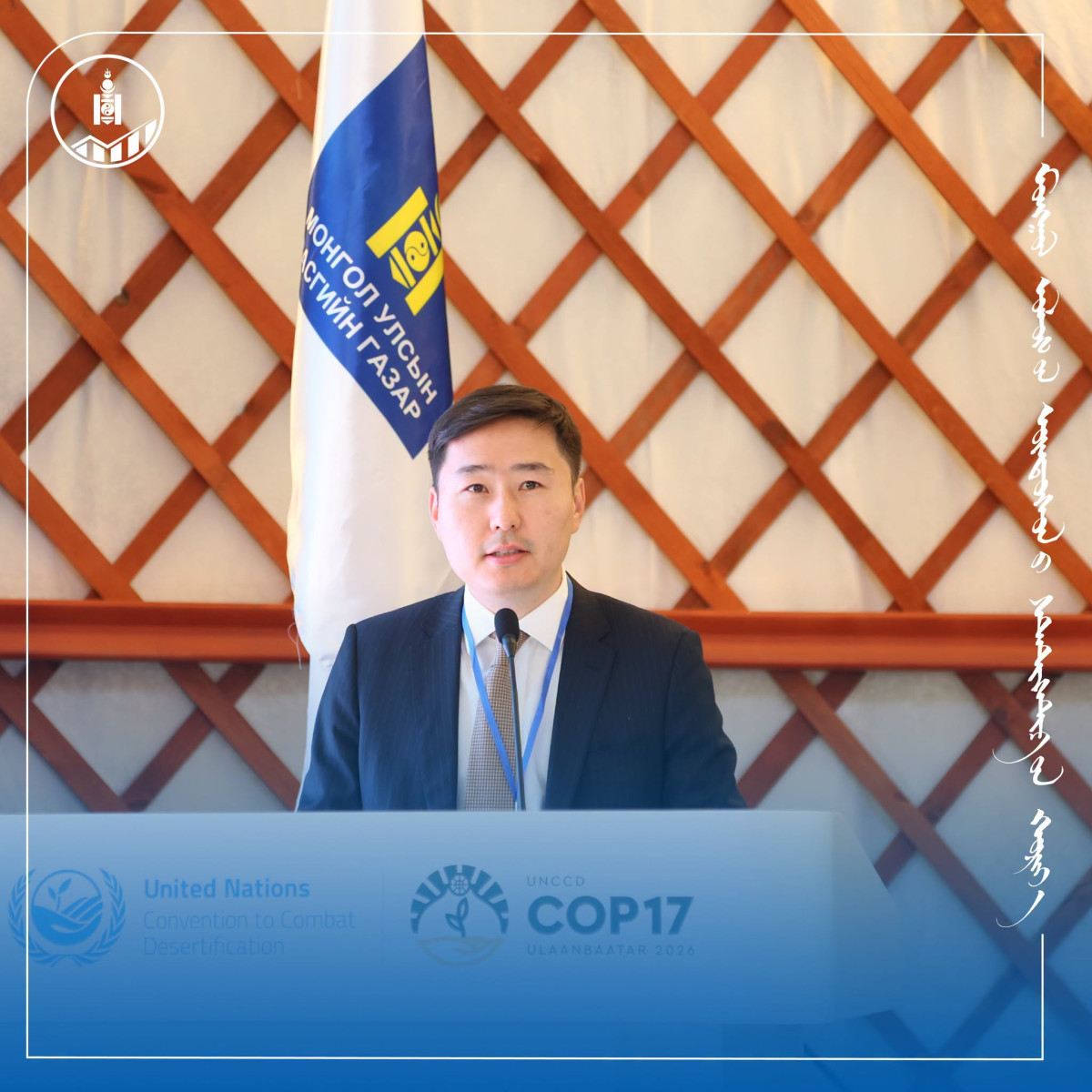
In his remarks, Mr. B. Batdavaa, Chairman of the National Statistics Office, highlighted the importance of integrated and decision-useful data in assessing whether investments in land rehabilitation and strengthening resilience to drought are achieving their intended outcomes. He noted that in recent years, the NSO has focused on strengthening the statistical system and improving its operations, while creating opportunities to integrate census and survey data with new sources of data, including administrative records and databases maintained by government institutions, geospatial data, and mobile data.
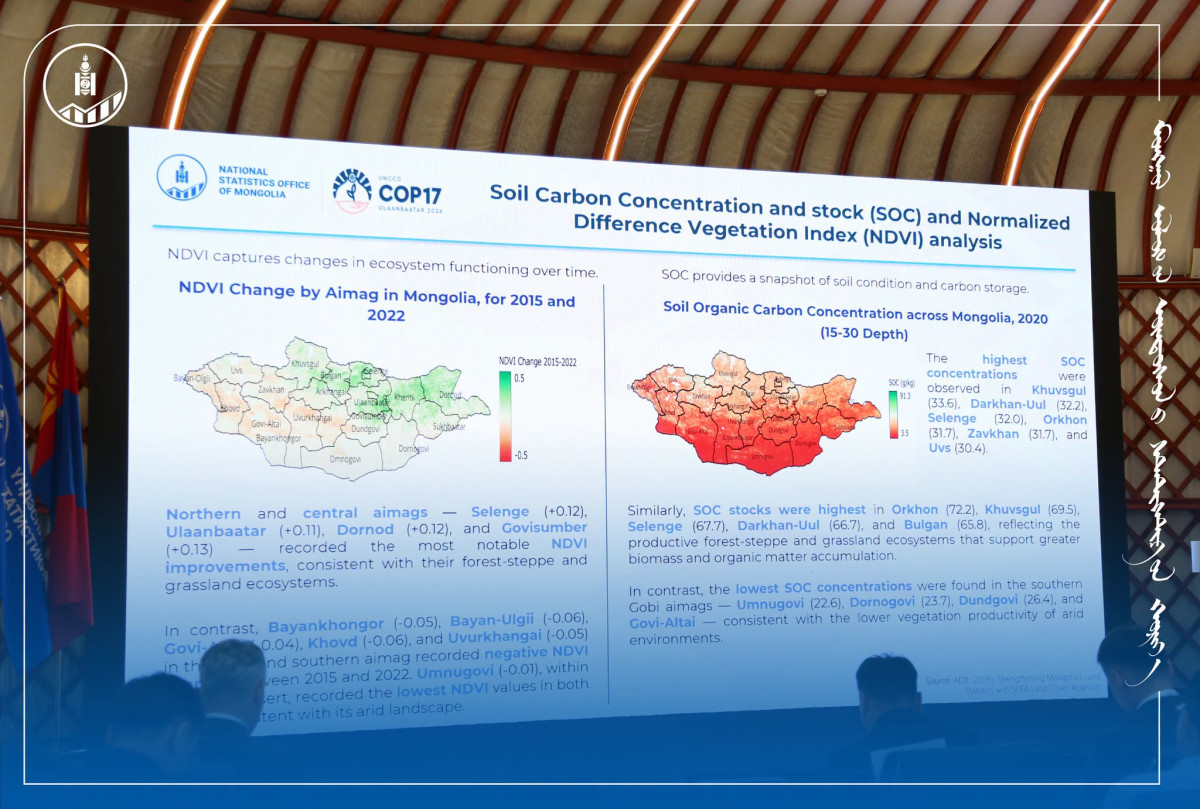
During the side session, representatives of the National Statistics Office, the National Audit Office, and research institutions exchanged views on ways to strengthen cooperation in harmonizing data standards and methodologies, building institutional capacity, and fostering partnerships that bridge policy development with practical experience.


Холбоотой сэдвүүд
Санал болгох