KDDI Admits Subsidiary Sparked Devastating Mongolian Wildfire
 Ч.Сумъяабазар
10 сарын 22, 2026

ULAANBAATAR, Mongolia — Japanese telecommunications giant KDDI has officially acknowledged that a massive, destructive wildfire that ravaged thousands of square kilometers of pristine wilderness in eastern Mongolia was connected to the activities of its subsidiary, Mobicom Corporation. The admission marks a sharp pivot from earlier public defense issued by Mobicom, which had previously maintained that its Japanese management team members had nothing to do with the outbreak of the catastrophic blaze.
The massive inferno, which ignited on October 8 within the ecologically fragile Numrug Strictly Protected Area in Mongolia’s Dornod Province, ultimately scorched approximately 80 percent of the reserve—devastating rare flora, fauna habitats, and an estimated 5,000 square kilometers of grassland before crossing international boundaries.
Corporate Admission and Shifting Stance
In official statements released by parent company KDDI and Mobicom leadership, the corporate entities conceded that executive presence and vehicle operations in the restricted zone directly sparked the disaster. Mobicom CEO Yasuhiro Ochi—who was present at the site alongside other company executives when a field vehicle's exhaust and mechanical failure ignited dry seasonal vegetation—publicly offered a heartfelt apology.
“Speaking on behalf of Mobicom, as well as in my personal capacity, I offer my sincere and heartfelt apologies,” Ochi stated. “We firmly believe that we must fully uphold our social responsibilities, and we will take all necessary steps and commit ourselves to the restoration of the natural environment.”
The admission stands in stark contrast to Mobicom’s initial narrative following the outbreak. Early communications from the corporate camp had vigorously defended its leadership, insisting that the Japanese management members were entirely unconnected to the ignition of the wildfire. However, mounting public fury, independent investigative scrutiny, and political pressure in Ulaanbaatar quickly unraveled those denials, compelling the parent company to walk back its defense.
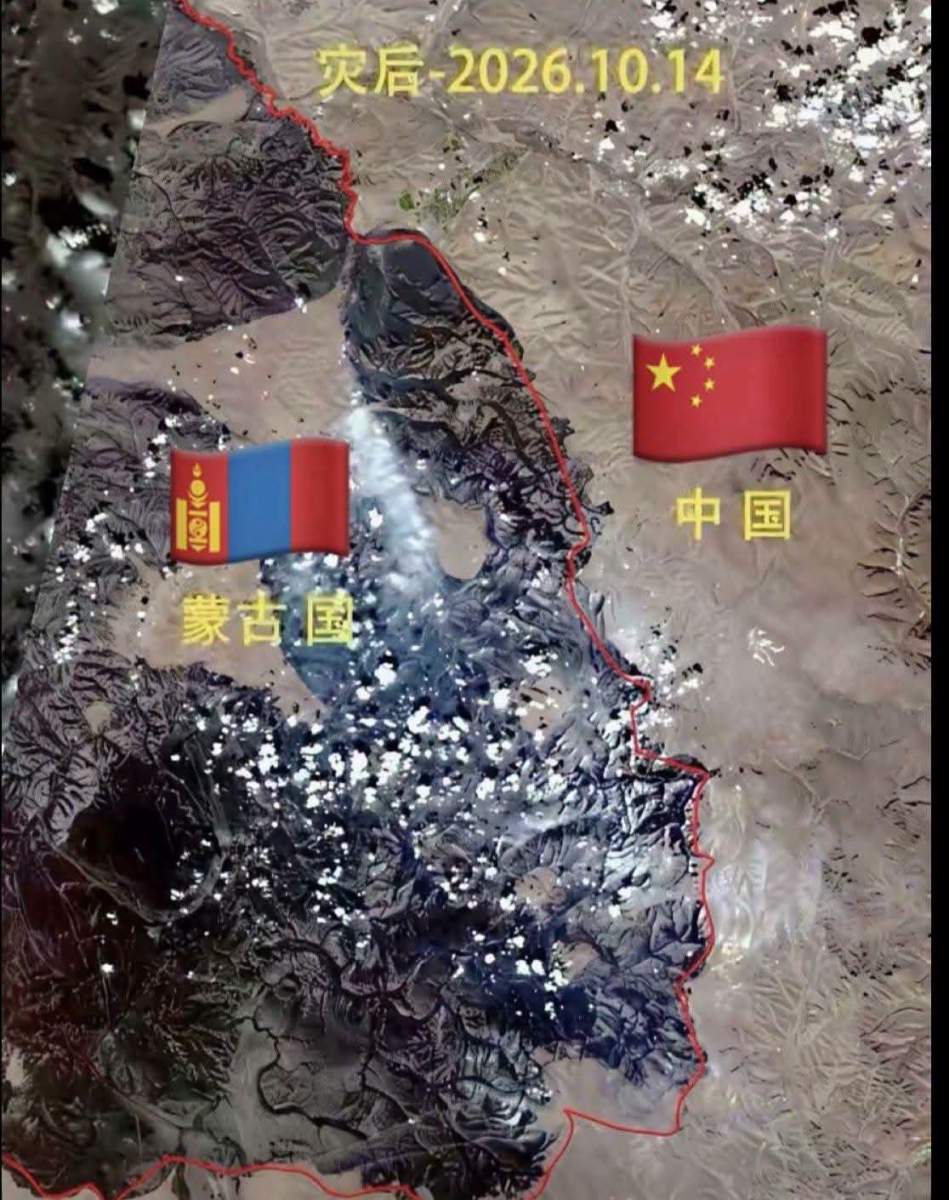 A satellite image appears to show a wildfire-scarred landscape ending almost precisely at an international boundary, marked in red, with a striking contrast between the darker terrain on the Mongolian side and the lighter landscape across the border in China.
Cross-Border Crisis and Environmental Devastation
The remote wilderness fire quickly escalated into an international environmental crisis. Propelled by severe seasonal drought conditions and high winds, the wall of flames swept rapidly eastward toward the Chinese border. The situation grew so perilous that neighboring China mobilized over 3,400 firefighters and emergency personnel into Inner Mongolia to construct strict containment lines and defensive surveillance zones, successfully preventing the blaze from breaching deep into Chinese territory. Joint Mongolian and Chinese firefighting efforts ultimately succeeded in containing and extinguishing the front lines after an intense multi-day battle.
Mongolia’s Minister of Justice and Internal Affairs, T.Ganzorig, announced that state authorities, alongside border administration officials, have initiated an exhaustive joint investigation into the disaster. Officials are examining how high-level executives secured permits into the strictly protected core zone, with initial findings indicating severe regulatory breaches and corporate negligence.
Legal and Ecological Aftermath
With roughly 80% of the Numrug reserve turned into ash, the Mongolian government has made clear that accountability will be strictly enforced. Authorities have launched a comprehensive assessment covering canopy destruction, soil degradation, and loss of wildlife.
“Measures will be taken to hold officers of the border administration and employees of Mobicom Corporation accountable and to recover the damages,” Minister Ganzorig declared. “Those responsible will be required to pay full compensation.”
In response to the mounting legal and regulatory pressure, KDDI announced that it would fundamentally review its cross-border field testing protocols and safety management frameworks to ensure such an ecological catastrophe is never repeated. Meanwhile, environmental experts warn that full ecological recovery for the unique biodiversity of the Numrug reserve will take decades. KDDI owns 98.84% of Mobicom.
Source: https://mongolia.gov.mn/
Холбоотой сэдвүүд
гал түймэр дорнод мобиком корпораци мобиком ххк нөмрөг ой хээрийн гал түймэр
Санал болгох





Сэтгэгдэл бичих
Та сэтгэгдэл бичихдээ бусдад хүндэтгэлтэй хандана уу. Ёс бус сэтгэгдлийг Peak.mn сайт устгах эрхтэй.