COP17: Grounding Fashion in the Soil-UNCCD High Level Event Tackles the Land Impact of Global Apparel
 Ч.Сумъяабазар
08 сарын 25, 2026

ULAANBAATAR, Mongolia — Long before a garment reaches the runway or a retail rack, its journey begins deep within the earth. From pastureland to soil, ecosystem to water, the global apparel industry is fundamentally a land-use sector—one whose footprint stretches into the fragile livelihoods of millions of pastoralists and farmers worldwide.
Gathered inside the Action Dome during Finance Day at the 17th session of the Conference of the Parties to the United Nations Convention to Combat Desertification (UNCCD COP17) in Ulaanbaatar, global leaders, policymakers, luxury fashion executives, and herding advocates convened for the high-level segment of the Fashion4Land (F4L) Forum.
The central dilemma framing the session was stark: as international environmental regulations accelerate around traceability, deforestation, due diligence, and sustainability disclosures, how can the global fashion industry regulate for higher ambition without creating bureaucratic fragmentation that penalizes those at the very beginning of the supply chain?
Mongolia’s Cashmere Legacy: Connecting Land to Global Markets
Opening the forum, host nation representative B.Battsetseg, Minister of Foreign Affairs of Mongolia and COP17 President, emphasized the profound connection between raw textile fibers and natural ecosystems. Highlighting Mongolia’s pivotal role in global luxury supply chains, Minister Battsetseg noted that the nation accounts for approximately 40% of the world’s raw cashmere production—a sector sustaining roughly 190,000 herder households and 27 million goats.
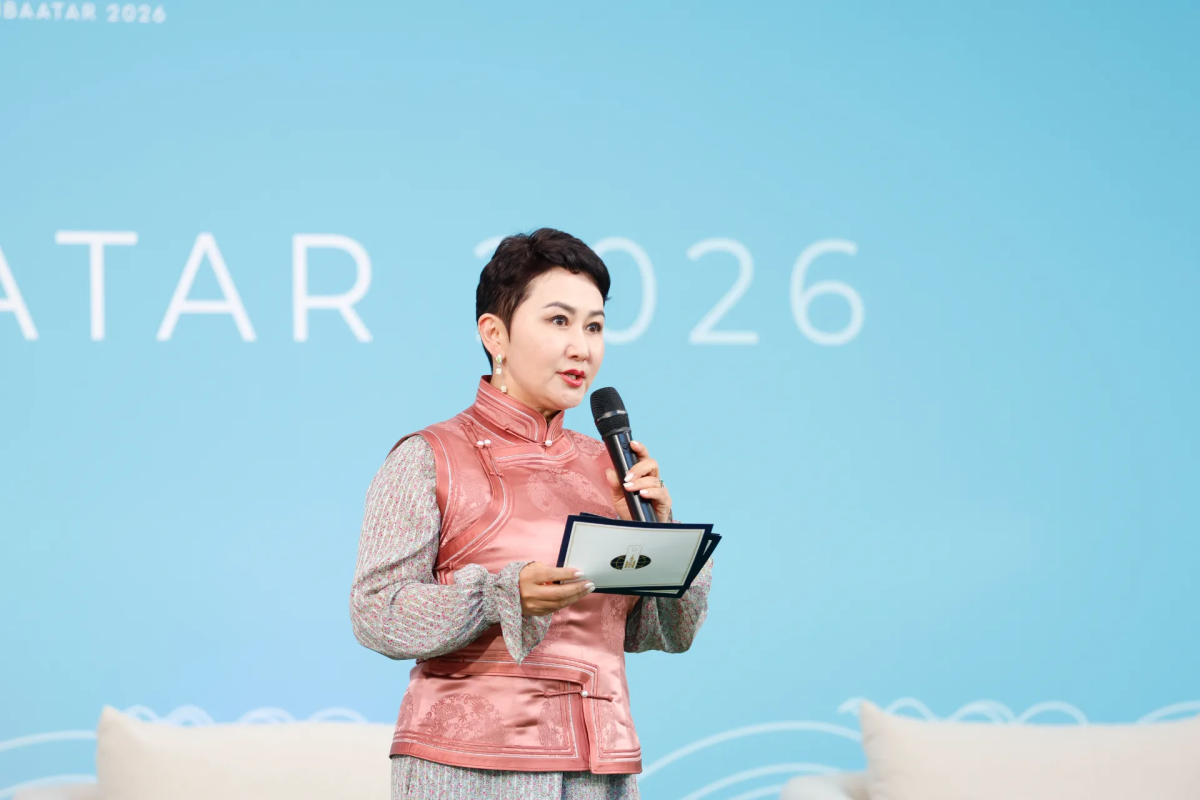
“At first glance, fashion and land may appear to be separate issues. In reality, however, they are profoundly interconnected. Behind every fiber of the clothes we wear are land and natural resources. Each fiber begins with soil, rangelands, forests, water, and ecosystems. Behind these resources are the livelihoods, knowledge, and hard work of communities whose well-being depends on healthy and productive landscapes.”
— B. Battsetseg, Minister of Foreign Affairs of Mongolia
Minister Battsetseg called attention to the UN’s designation of 2026 as the International Year of Rangelands and Pastoralists (IYRP 2026)—an initiative spearheaded by Mongolia—as well as the national "White Gold" movement aimed at adding value to livestock raw materials while safeguarding nomadic heritage. She urged the international community, private sector investors, and financial institutions to ensure that evolving environmental standards act as enablers rather than barriers for smallholders, primary producers, and herders.
“The future of sustainable fashion should be measured not only by the value of its products, but also by how effectively it protects the land, ecosystem, and communities upon which production depends.”
— B. Battsetseg, Minister of Foreign Affairs of Mongolia
Overcoming Fragmentation Across the Value Chain
Adding a broader environmental governance perspective, Inger Andersen, Executive Director of the United Nations Environment Programme (UNEP), warned of the mounting crisis of fast fashion and textile waste, which is projected to reach nearly 150 million tonnes annually by 2030.
Andersen pointed out that while European consumers often believe secondhand clothing exports promote recycling, the influx of discarded textiles frequently clogs waste streams, landfills, and drainage systems in developing regions. She called for standardized reporting, circular design, and greater transparency across complex value chains, noting that fewer than 10% of top fashion brands currently disclose their fiber processing suppliers.

Aligning with this call for policy coherence, Yasmine Fouad, Executive Secretary of the UNCCD, praised Mongolia's unique model of balancing tradition with modern industrial progress.
“What Mongolia has done beautifully well... is that they conserve their tradition and mix that with the modern part. So they were able to provide an opportunity for going through and breaking through the industry of fashion, yet keeping their core and the roots grounded at the land.”
— Yasmine Fouad, Executive Secretary of the UNCCD
Executive Secretary Fouad stressed the need for the Fashion4Land platform—originally launched at COP16 in Riyadh—to drive actionable policy coherence and stronger global partnerships as the convention progresses toward COP18, ensuring that fashion initiatives deliver tangible benefits for both local communities and the land.
The Cost of Compliance on the Steppe
A key consensus emerged during the panel discussions: the proliferating tangle of certification schemes and compliance standards is dangerously draining resources away from actual land restoration.
Representing the production and industry perspective, Gentari Gadzhetek, Chair of the Board at Khanbogd Cashmere and Enrique Micho, co-chair of the Global Alliance for the International Year of Rangelands and Pastoralists, highlighted a sobering reality. Based on Mongolia's national assessment released for COP17, 81.9% of Mongolian territory experiences some degree of desertification or degradation. However, he noted reason for hope: the share of heavily degraded rangeland fell from 10.2% to 6.6% between 2018 and 2022, demonstrating that the right practices produce results.
Gadzhetek underscored the vast gap in global restoration funding, noting a US$278 billion annual shortfall against the required US$355 billion. He pointed out that with over 400 distinct environmental standards and certifications active in the textile sector, primary producers and herders are burdened by duplicate audits, consultant fees, and administrative paperwork that fail to invest a single dollar directly into the rangeland itself. He advocated for mutual recognition of credible standards, alignment with UN Sustainable Development Goal targets (SDG 15.3.1), and de-risking capital to direct private investments toward landscape restoration.
Industry leaders agreed on the necessity of streamlined frameworks. Helene Valade, Group Environmental Development Director at LVMH, welcomed environmental regulation as a crucial mechanism to establish a baseline of accountability, but warned against "supplier fatigue" caused by uncoordinated questionnaires from competing brands. She detailed how sectoral alliances in France and Italy are moving toward single, unified survey questionnaires to ease the administrative burden on supply chain partners.
Speaking on behalf of primary stewards, Enrique Michaud, Co-Chair of the Global Alliance for IYRP 2026, urged decision-makers to respect traditional pastoralist knowledge as a valid scientific discipline rooted in generations of environmental observation. He cautioned against burdening the least economically powerful actors with a disproportionate share of the world's sustainability costs.
Closing the panel, Una Jones, CEO of the Sustainable Fibre Alliance (SFA), stressed that sustainability frameworks must remain practical and grounded in the realities of herder communities.
“If the scientifically advanced indicators are put forward and none of the herder communities and pastoralists are able to follow them, those frameworks and standards are valueless.”
— Una Jones, CEO of the Sustainable Fibre Alliance
Looking Ahead: Global Cashmere Forum 2027
Building on the momentum of the COP17 proceedings in Ulaanbaatar, conference organizers announced a major upcoming international initiative to further strengthen sustainable natural fiber value chains.
In a closing announcement, host nation representative revealed that Mongolia will host the Global Cashmere Forum next year in partnership with the Ministry of Food, Agriculture and Light Industry. As the producer of nearly half the world’s cashmere—boasting five natural shades of high-grade fiber—Mongolia extends an open invitation to global fashion brands, international investors, and industry stakeholders to convene on the Mongolian steppe to celebrate quality, support herder livelihoods, and advance sustainable land stewardship.




Холбоотой сэдвүүд
Санал болгох

Холбоотой мэдээ





Үндсэн категори

Холбоо барих
Мэдээ
Редакц
Имэйл
Холбоо барих
Улаанбаатар хот-14201, Чингэлтэй дүүрэг, Бага тойруу, Метро Бизнес Төвийн 1103 тоот
© 2017-2027 Пийк Медиа Групп ХХК. Бүх эрх хуулиар хамгаалагдсан.
Сэтгэгдэл бичих (1)
Та сэтгэгдэл бичихдээ бусдад хүндэтгэлтэй хандана уу. Ёс бус сэтгэгдлийг Peak.mn сайт устгах эрхтэй.
Зочин [103.26.195.235] ・ 2026.08.25 Хариулах
ene odoo nutsgen shaldan yum shg huwtsas umsuultsen yum shg cop deer jo ontsguil sanagdaj bn