COP17: Women Herders Take Centre Stage at Gender Caucus Session
 Ч.Сумъяабазар
08 сарын 27, 2026

ULAANBAATAR, Mongolia — Women herders and pastoralists must be recognised not only as among those most affected by drought and land degradation, but as key leaders in protecting rangelands, biodiversity and traditional knowledge, speakers said at a high-level Gender Caucus held during UNCCD COP17 in Ulaanbaatar on August 26.
The meeting, titled “Enhancing women herders and pastoralists' contribution to stewardship and resilience,” brought together government representatives, UN officials and civil society organisations to discuss women's access to land, finance, technology and decision-making.
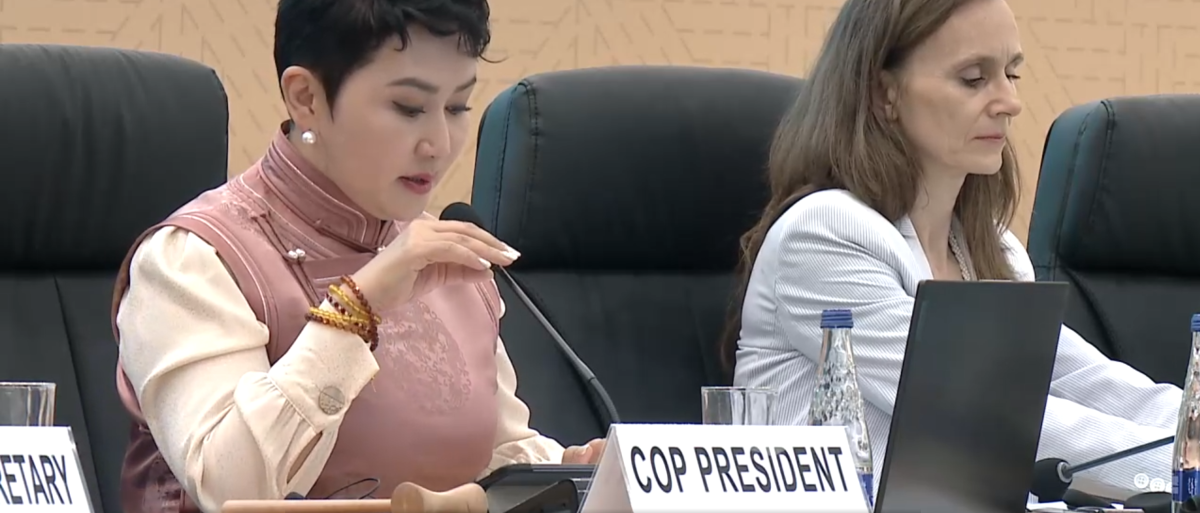
Opening the meeting, Foreign Minister of Mongolia and COP17 President B.Battsetseg said gender equality must be integrated into efforts to combat desertification and restore degraded land.
“The Ulaanbaatar Conference must be an implementation-oriented conference. As the first woman to preside over a UNCCD Conference of the Parties, I encourage all delegations to translate commitments into concrete actions and tangible results. We firmly believe that the Sustainable Development Goals cannot be achieved without gender equality.” — B.Battsetseg, Foreign Minister of Mongolia and COP17 President.
She stressed that women play a critical role in sustainable land management, agriculture, biodiversity conservation and rural livelihoods, while calling for commitments to be translated into tangible results.
UNCCD: Move from participation to action
UNCCD Executive Secretary Yasmine Fouad said her meetings with Mongolian pastoralist women demonstrated that their role extends far beyond household income and livestock management.
Women also preserve and transfer traditions, culture and identity between generations, she said.
“Here we're talking about moving from the decision making and the participation to the actual implementation on the ground.” — Yasmine Fouad, UNCCD Executive Secretary
Fouad called for stronger implementation of the UNCCD Gender Action Plan and greater support from governments, businesses, NGOs and philanthropic organisations.
She said the real measure of progress should be results “from the ground and from the women themselves.”
Women carry responsibility without equal rights
UNESCO Deputy Director General Osa Charlotte Regner highlighted the growing pressures facing women pastoralists as climate change intensifies.
In many communities, women are taking on more livestock management and responsibility for land and water as men increasingly move towards urban areas. However, this greater responsibility has not necessarily brought greater decision-making power.
Regner cited data showing that in 85% of countries with available data, women have weaker land ownership or tenure rights than men. “The challenge is not performance, but recognition,” she said.
She argued that women's traditional knowledge should be incorporated into land management and restoration programmes and added resources to the three principles of recognition, rights and representation.
Mongolia proposes gender-responsive budgeting
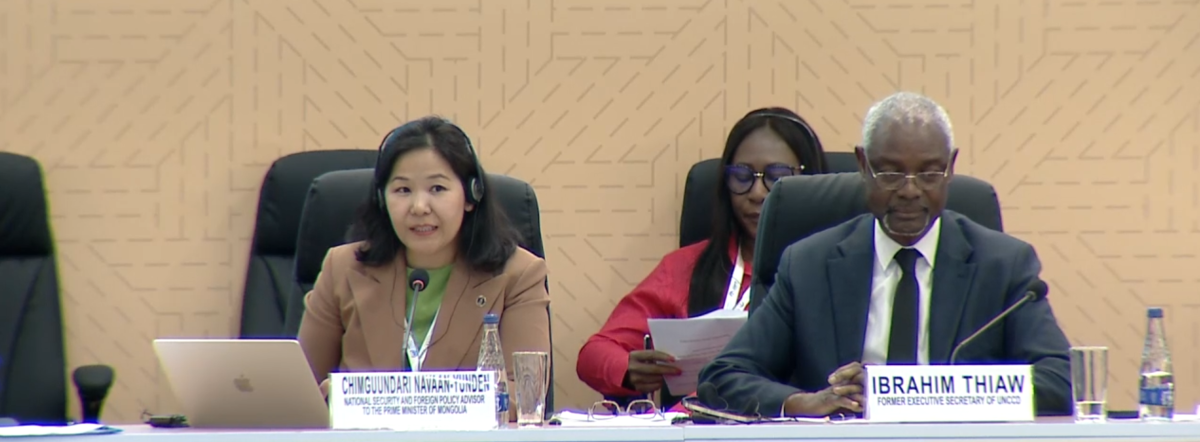
Mongolia's National Security and Foreign Policy Advisor to the Prime Minister, N.Chimguundari, said the country wants to turn the UNCCD Gender Action Plan into measurable implementation before 2030.
She proposed embedding gender-specific indicators into government budgets and using performance-based budgeting to make funding more accountable. “Transformative equality cannot materialize through isolated donor grants.” she said.
She also called for stronger rural extension services so that nomadic women can gain better access to climate-smart technologies, financial tools and information. “Giving women space is not enough...restoring the earth is not just a question of restoring degraded land. It's encouraging those to flourish who care for and maintain land. Where a woman leads, communities prospers, the earth regenerates and future development is possible”, she said.
Ecuador's Vice Minister of Environment and Marine Coastal Affairs Alicia Jaramillo Cabo said women pastoralists have long been central to environmental and community resilience. “We as women do not merely inhabit the land, we create it.” She called for women to have leadership roles in designing solutions rather than simply being included in discussions. “Giving them space is not enough. We need rather their leadership at the center of the table designing the solutions for the future,” she said.
The discussion also saw calls from Zimbabwe, Canada, Australia and other countries for gender-responsive financing, secure land rights and greater participation of women in land governance.
For Mongolia, hosting the Gender Caucus during COP17 provides an opportunity to connect its pastoralist traditions with global efforts on land restoration and gender equality.
The central message from the meeting: women pastoralists are already contributing to the resilience of land and communities. The next challenge is to give them the rights, resources and decision-making power to shape the future of those lands.
Холбоотой сэдвүүд
Санал болгох






Сэтгэгдэл бичих
Та сэтгэгдэл бичихдээ бусдад хүндэтгэлтэй хандана уу. Ёс бус сэтгэгдлийг Peak.mn сайт устгах эрхтэй.