COP17: Rio Conventions Synergy: "A Matter of Survival" for Host Nation Mongolia at UNCCD
 Ч.Сумъяабазар
08 сарын 21, 2026

ULAANBAATAR, Mongolia— Global environmental delegates gathered in Ulaanbaatar on Thursday for the Technical Dialogue on Rio Synergies at the 17th Conference of the Parties to the UN Convention to Combat Desertification (UNCCD COP17). The session focused on breaking down international silos to address climate change, biodiversity loss, and land degradation through unified, ground-level action.
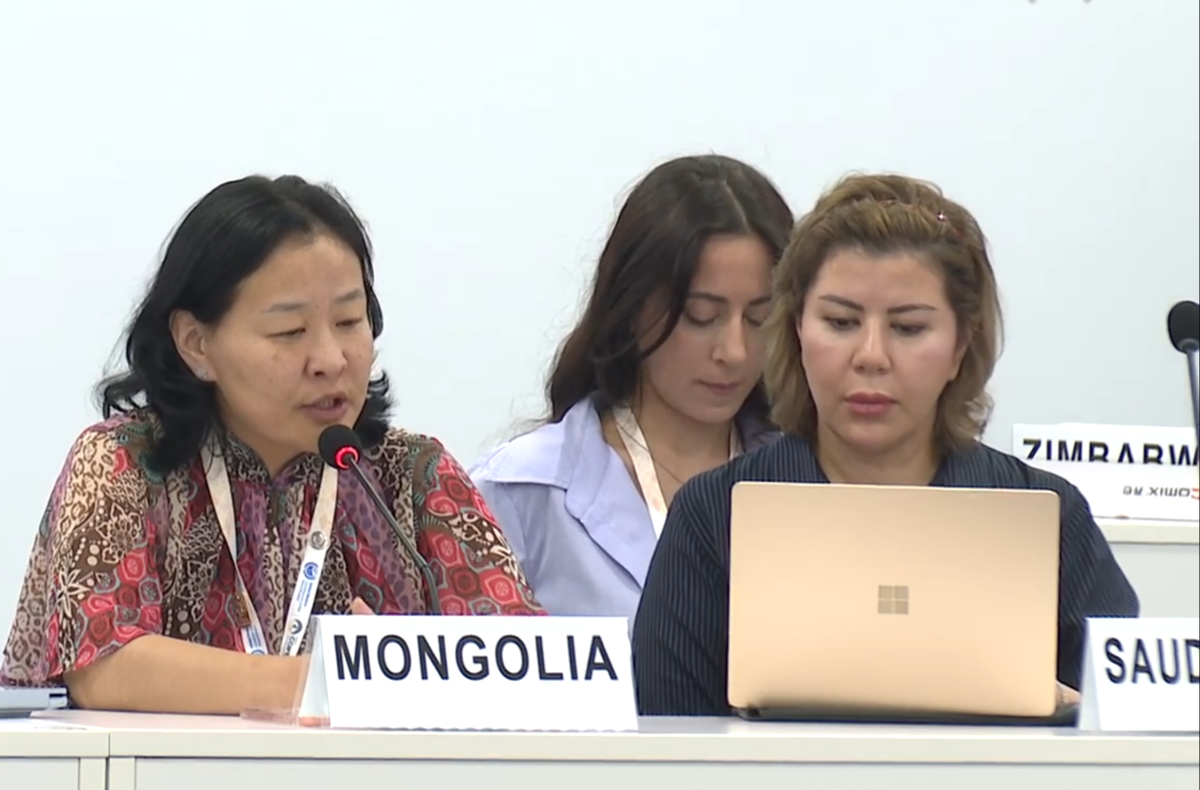
Host nation Mongolia delivered a strong statement, emphasizing that aligning international commitments across the three Rio Conventions—UNCCD, UNFCCC, and CBD—is an urgent necessity for the country's heritage and survival.
"For the Mongolian government and for the people of this country, synergies between the Rio Conventions are highly important," said Ms. Ariunaa, representative for the Mongolian Ministry of Environment and Climate Change, upon joining the dialogue. "The synergy is all about Mongolian survival."
Land as the Common Ground
The Ulaanbaatar Technical Dialogue represents the first technical session in the "Antalya Dialogue Series," an initiative launched in May 2026 by Türkiye's incoming COP31 presidency, the G20 Global Land Initiative, and the IUCN-backed ENACT Partnership. The series aims to move global environmental policy past abstract commitments toward concrete implementation on the ground ahead of UNFCCC COP31 in Antalya.
Stuart McGuinness, Deputy Director at IUCN and chair of the session, framed the meeting's core imperative.
"The challenge before us is no longer whether we recognize the importance of synergies, but rather whether we can actually translate that commitment and that interest... into real practical action," McGuinness noted, stressing that international decisions must operationalize where policy meets local realities.
Professor Dr. Kasim Yenigun, representing Türkiye’s COP31 presidency designate, reiterated that the effort does not seek to create new bureaucratic hurdles or reporting obligations.
"Today, we no longer need to prove that these challenges are interconnected. The question is how we act together," Yenigun said. "Our objective is much simpler: connect what already exists and turn synergy into implementation."
 Survival and Heritage: Mongolia's Call to Action
Addressing delegates, Ms.Ariunaa highlighted how ecological integration is deeply rooted in the nomadic host country's identity.
"Synergies are part of the Mongolian lifestyle; it's part of the cultural and natural heritage," she stated. "Regardless of what the countries decide at this COP about synergies, we should stay together and we should unite to keep the synergies at all levels—at all possible means of communication, political arrangements, and means of implementation on the ground."
Nearly 77% of Mongolia’s territory suffers from land degradation and desertification, making integrated land restoration, drought management, and climate action central to national development and pastoral livelihoods.
Global Perspectives on Streamlining Implementation
Delegates from over 20 countries shared national strategies, highlighting a consensus: effective synergies do not require merged treaties or new secretariats, but rather coherent national policies, shared data frameworks, and joint financing streams.
- Australia: Lalita Kapoor, Chargée d'affaires for Australia—which is leading negotiations for UNFCCC COP31 in tandem with Türkiye's action agenda—emphasized that "tightening fiscal environments demand that we work not only harder, but smarter." Delegate Ethan Wignall detailed Australia's integrated nature repair and carbon crediting markets, which simultaneously incentivize carbon reduction and ecosystem restoration.
- Armenia: Presenting the perspective of the incoming CBD COP17 presidency, Nareen Hakobian stressed that landlocked and mountainous countries face compound risks. She noted that Armenia’s upcoming biodiversity summit in Yerevan will place Nature-based Solutions (NbS) at the center of joint climate and land targets.
- India: UNCCD National Focal Point Clement Ben pointed out that existing monitoring tools, such as India's Land Degradation Atlas and State of Forest Reports, already collect multi-purpose data. He urged for better interoperability between national datasets and international reporting mechanisms.
- European Union & France: Representatives from the EU and France called for integrated spatial planning and targeted landscape restoration. French delegates pointed to forest preservation and Nature-based Solutions as prime examples where actions naturally fulfill climate, land, and biodiversity targets at once.
- Egypt & Panama: Egypt’s delegation emphasized scaling up Nature-based Solutions via the ENACT Partnership to combat severe drought, while Panama highlighted its "Nature Pledge" as a model for consolidating disparate departmental goals into streamlined national targets.
From Ulaanbaatar to Antalya
As discussions concluded, organizers confirmed that feedback and technical proposals from the Ulaanbaatar dialogue will feed into upcoming ministerial forums during UNCCD COP17. The process will continue through CBD COP17 in Yerevan, Armenia, culminating in the formal launch of a country-led "Rio Synergies Group for Action" at UNFCCC COP31 in Antalya.
Холбоотой сэдвүүд
Санал болгох