COP17: China Showcases Decades of Anti-Desertification Achievements at UN Climate Summit in Ulaanbaatar
 Ч.Сумъяабазар
08 сарын 19, 2026

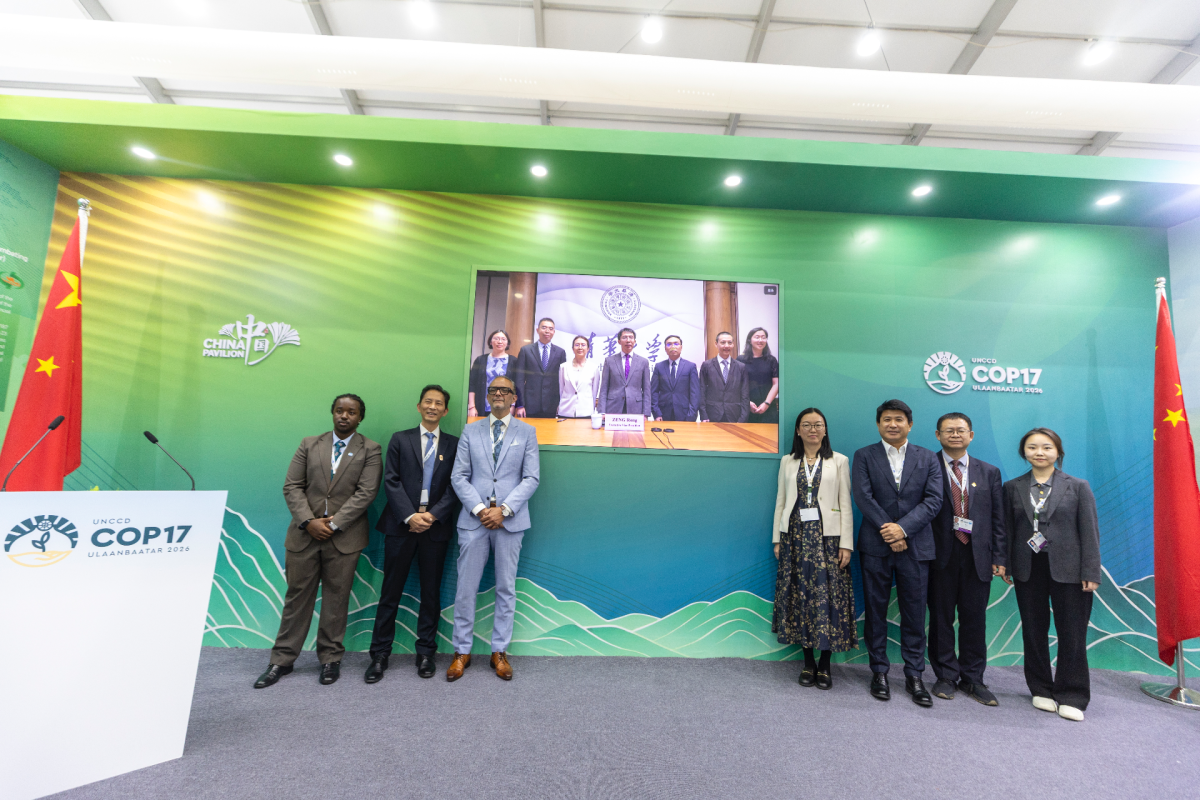
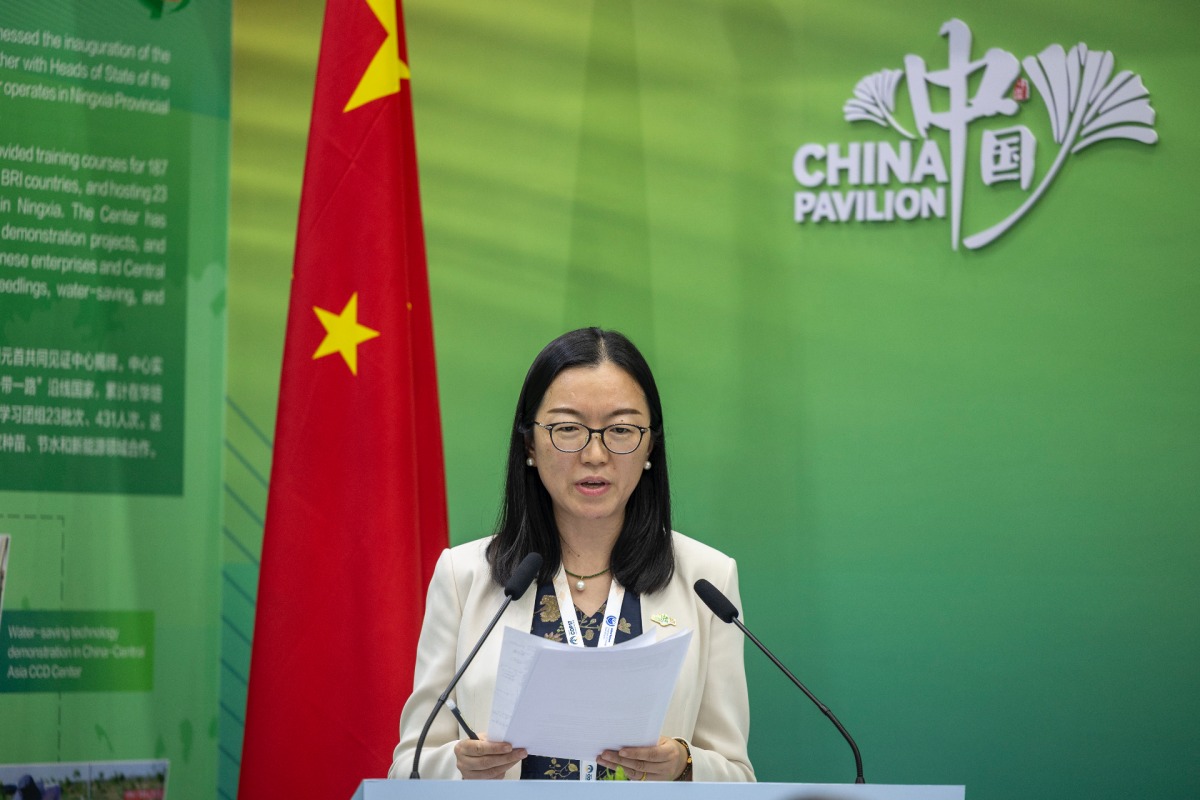
ULAANBAATAR, Mongolia—In the diplomatic "Blue Zone" of Ulaanbaatar's National Garden Park, where world leaders and UN delegates have gathered for the 17th session of the Conference of the Parties (COP17) to the United Nations Convention to Combat Desertification (UNCCD), a major centerpiece has drawn the spotlight: China’s newly unveiled “China Corner” exhibition.
Under the summit's overarching banner "Restoring Land. Restoring Hope," the pavilion details how Beijing transformed vast swathes of arid wasteland into arable soil, establishing China as the first nation in the world to achieve "zero net growth" in land degradation.
The World’s Largest Reforestation Campaign
At the heart of the exhibit is China’s flagship Three-North Shelterbelt Forest Program (TSFP), popularly known as the "Great Green Wall." Launched in 1978 and scheduled to run through 2050, the multi-decade effort spans northern China to stem the advance of the Gobi and Taklamakan deserts.
According to figures presented at the summit:
40.76% — Current combined forest and grassland coverage within the project area.
67.82% — Total treatment rate of targeted desertified land across the northern belt.
15.33 million hectares — Degraded grassland rehabilitated since the launch of China's 14th Five-Year Plan.
80.66 million hectares — Prairie land protected under strict enclosure and seasonal grazing bans, directly benefiting an estimated 12 million pastoralists and rural residents.
"Restoration requires continuity—ecological recovery happens over decades, not years," noted UNCCD officials during opening reviews, citing China's anti-desertification legal framework and long-term land-use planning as model frameworks for international implementation.
Mechanization and High-Tech Sand Control
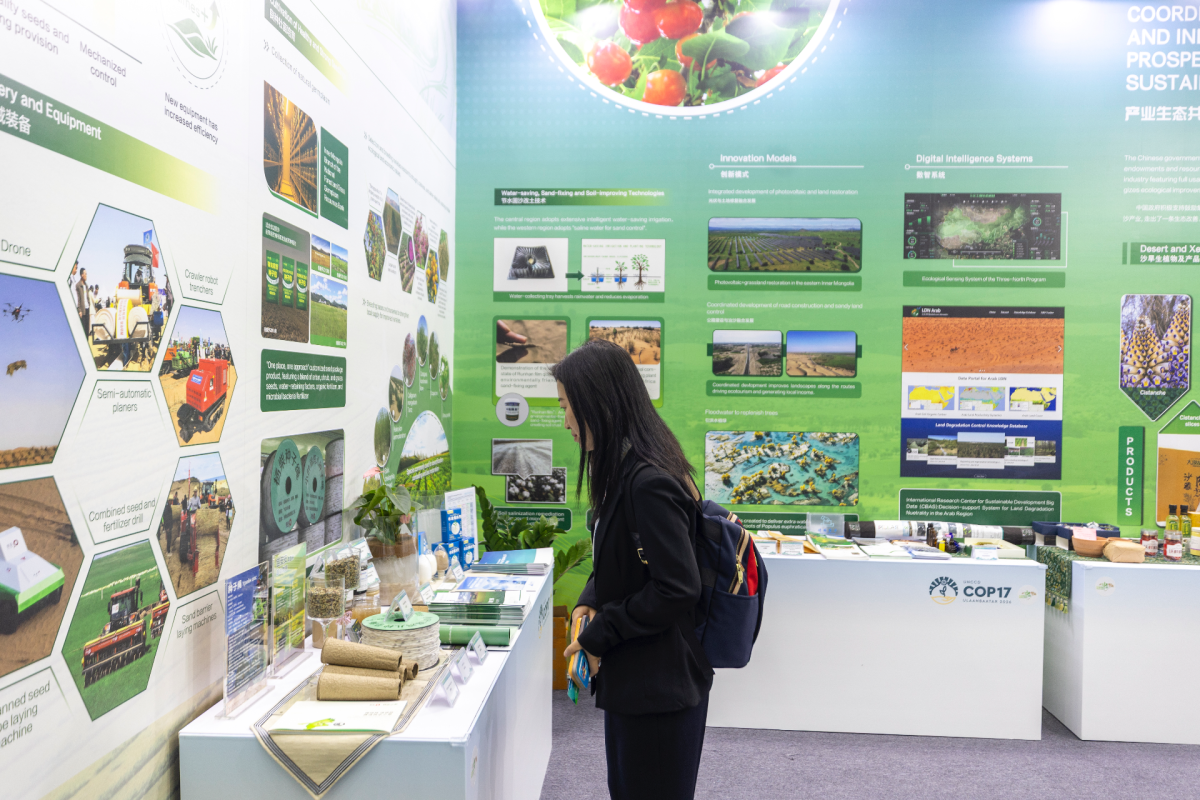
Moving beyond traditional tree planting, the exhibition highlights a shift toward high-tech, precision engineering. China reports that its mechanization rate for sand-control operations has reached 50%, while the adoption of high-quality, drought-resistant seeds has topped 75%.
The deployment of specialized mechanization—including automated grass-checkerboard laying machines and drone-assisted seeding—has boosted sand-stabilization efficiency threefold compared to manual labor. Furthermore, China has treated roughly 53% of its manageable salinized land, applying water-saving irrigation networks and solar-powered desalination tools.
Expanding Ecological Alliances in Central Asia
With host nation Mongolia facing severe environmental pressure—where over 76% of territory suffers from soil degradation—international cooperation forms a core theme of the pavilion. China has established specialized desertification management platforms with Arab nations, Central Asian republics, and neighboring Mongolia under the Belt and Road Initiative framework.
As global signatories negotiate legally binding resolutions in Ulaanbaatar, China's experience offers a concrete blueprint demonstrating that large-scale land degradation can be halted and reversed through sustained policy, scientific innovation, and targeted economic incentives.
Холбоотой сэдвүүд
Санал болгох